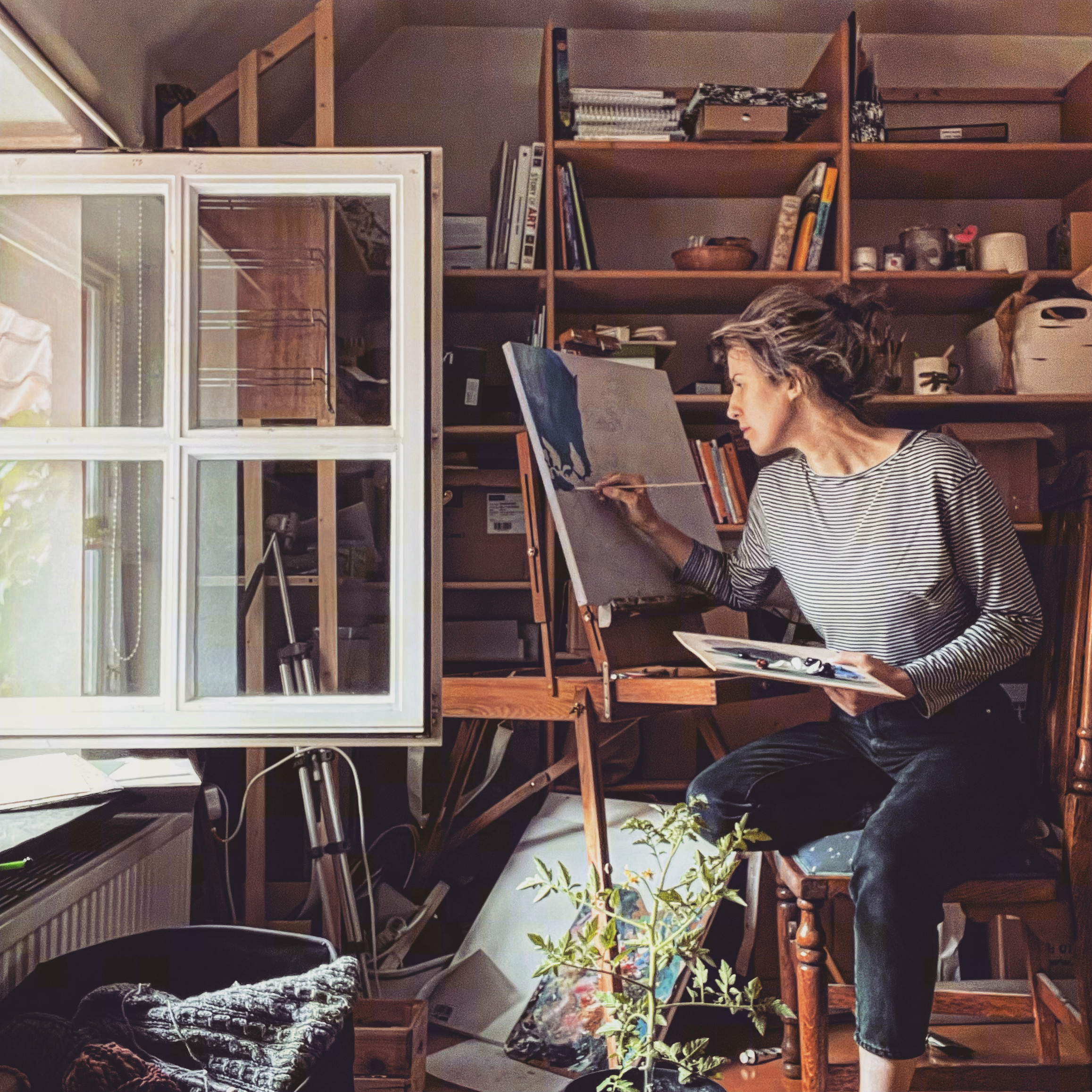
Ivy, take three
Redrawing the ivy motif for what feels like the tenth time — the leaves keep wanting to look like grapevine instead. Going back to pressed specimens from the garden tomorrow rather than working from memory.
Studio Linnert is the creative home of Helen Brinkhoff. An art practice analogue by conviction: every pattern originates in graphite, pen and ink, linocut or oil - because the friction of working slowly produces something that faster, puerly digital methods do not. Structure precedes ornament: mathematical principles, the golden ratio, and tessellating grids provide the foundation on which motifs are placed, with every compositional decision considered both for its visual effect and its meaning. Research is thorough; botanical and zoological subjects are drawn from anatomically and ecologically accurate reference, and historical or folkloric sources are traced to their origins before being interpreted. Pattern, here, is understood as visual language rather than surface embellishment - a tradition as old as human mark-making itself.
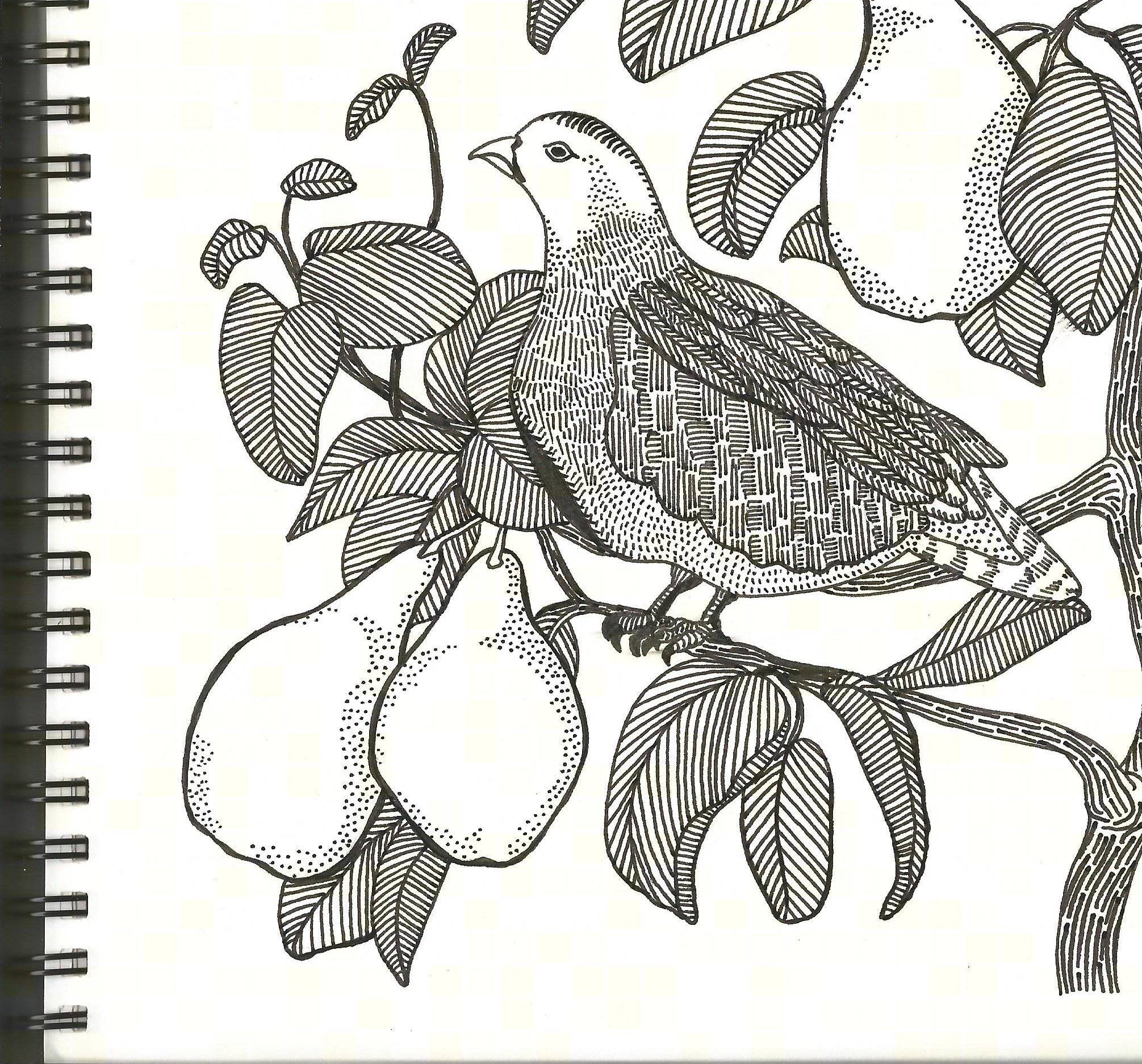
"The need or desire for ornament and decoration in our lives appears to be a universal one" — from 'The World of ornament' by David Batterham
Every pattern begins outdoors or at the studio window: a sketchbook, graphite, and a single plant or creature studied until its structure is understood, not just its likeness.
Studies are refined into line work by hand, and the pattern repeat is planned out on paper before anything is touched digitally.
The finished motif is built into a considered repeat, then tested against the surfaces it's meant for - wallpaper, textile, paper - so the pattern is judged in the room it will live in.
A small, rotating selection. Hover a tile to see the pattern applied — each piece exists both as a flat repeat and a finished surface.
Helen works the way the season or the subject demands, rather than settling on one medium and repeating it. A piece might begin as a linocut, cut and inked by hand; another week it's pen and ink at the kitchen table, or a graphite study that never leaves the sketchbook, or oil paint when a colour needs more weight than a line can carry.
That restlessness is deliberate. Moving between mediums keeps the eye honest and the hand from settling into habit — and the play of trying a motif three different ways, just to see, is as much a part of the finished work as the repeat pattern it eventually becomes. The enjoyment of making is not incidental to the practice; it is, in large part, the point of it.
Not everything here becomes a finished pattern. This is where the in-between work lives — sketches still finding their shape, experiments that didn't survive contact with the page, and the odd happy accident worth keeping a record of.
Redrawing the ivy motif for what feels like the tenth time — the leaves keep wanting to look like grapevine instead. Going back to pressed specimens from the garden tomorrow rather than working from memory.
Tried translating the magpie motif into hard angles instead of the usual linework. Technically fine, emotionally dead on arrival — shelving it. Sometimes a failed experiment just tells you which rules weren't meant to be broken.
First proper cut in months. Lost an afternoon to it and didn't mind one bit — there's a roughness in the print that the digital repeats never quite get back. Want to find a way to keep more of that.
A commissioned piece begins the same way every piece does — with observation. If you have a story, a garden, or a space that calls for something made specifically for it, this is where that begins.
Inquire about a CommissionPatterns from the studio archive are available to license for textiles, wallpaper, stationery, and homeware. Each license is considered individually, in keeping with how the work is made.
Inquire about Licensing